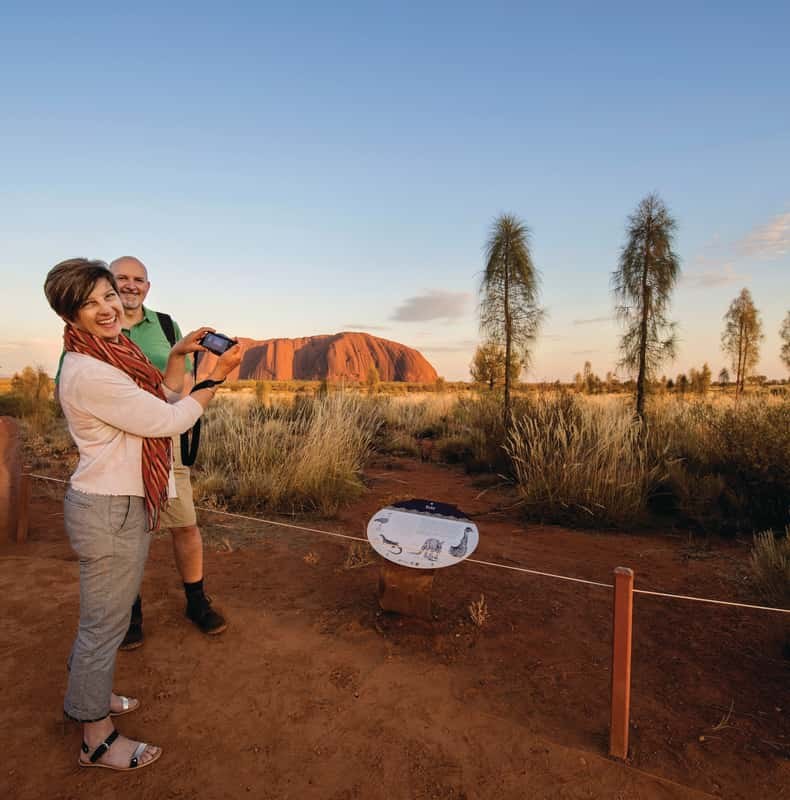
Yulara: Uluru Sunrise and Kata Tjuta Day Trip by Bus
Hot drink includedPickup included
From $150 per person
Parks Australia asks visitors on the Valley of the Winds walk to refrain from capturing images of the rock formations. The reason is that they hold knowledge which should only be learned in person, on location, by people with the cultural authority to do so. Close-ups of plants, animals and people are fine. Video is discouraged along the walk.
Nothing physically stops you, which is exactly why it is worth saying plainly. If photographs of the domes are your whole reason for coming, plan around Walpa Gorge and the two viewing areas instead. There is no such request at either. The cultural page explains where it comes from.
| Where | Photographs of the rock | Best hour |
|---|---|---|
| The dune viewing area | Yes | Sunrise and the last hour before sunset |
| The Kata Tjuta sunset viewing area | Yes | The last hour of light |
| Inside Walpa Gorge | Yes | Late afternoon, when the walls take colour |
| The Valley of the Winds walk | Parks Australia asks you not to | — |
| From the air | Yes | Sunset, on the 36-minute flight |
| The road in | Yes | Any hour with side light |
First light hits the eastern faces and the domes come up orange against a sky that is still blue-grey. That is the hour the sunrise day trip is built around, although it watches the actual sunrise from the Uluru side before driving west.
Through the middle of the day the conglomerate goes flat and grey-brown, and the shadows between the domes disappear. That is the worst of it. From about two hours before sunset the colour comes back and keeps deepening: orange, then red, then a plum much closer to violet than any photograph of Uluru.
Two reasons, both structural. Uluru is one continuous mass with parallel gullies, so it photographs as a silhouette and a texture. Kata Tjuta is thirty-six separate domes with gaps between them, so the shot is about the gaps: layered forms, one behind another, with light coming through.
The second is colour. The conglomerate carries darker granite and basalt clasts, and at distance it reads plum rather than orange. If you have photographed Uluru and set your white balance for it, expect to move.
The thirty-six domes never resolve as thirty-six from the ground, and this is the one argument for a flight. The sunset helicopter runs down the western face of Mount Olga and over Walpa Gorge, with the Valley of the Winds opening below. That is a frame the road cannot give you.
One thing to know before you book. Neither flight passes directly over either formation, and neither circles it — that is a cultural restriction on the airspace. You get the flank and the spread, not the overhead.
On a five-seat helicopter the middle of the back row is not the same product as a window seat. A reviewer on the shorter flight from the same operator wrote that she was placed there, had limited views, could not take a clear photograph, and paid what everybody else paid.
Ask about the seating arrangement when you book or at check-in rather than at the helipad. It is the single most useful sentence in this post if a flight is what you had in mind.
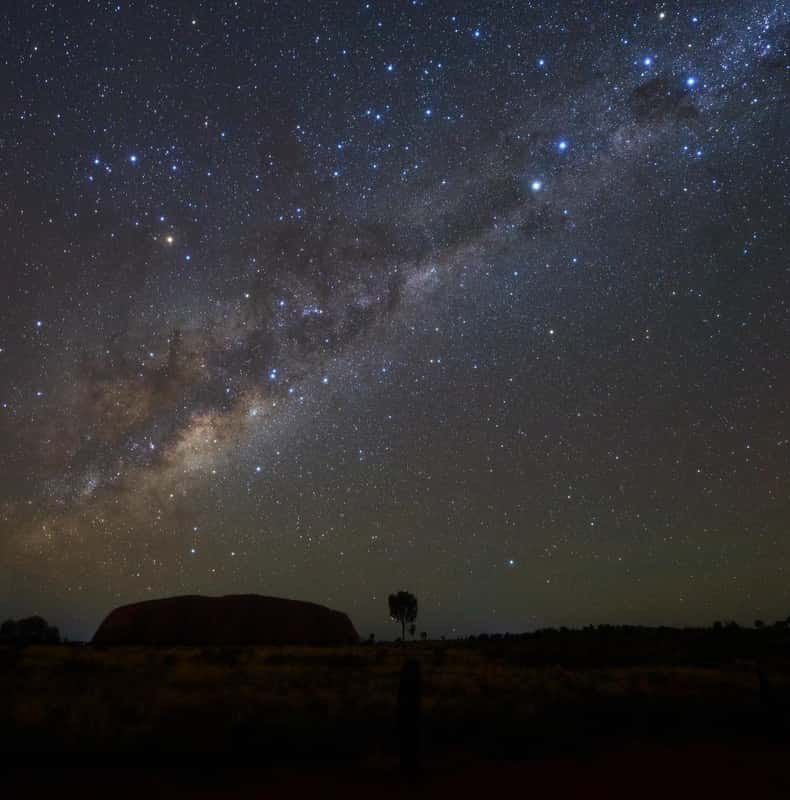
The sky here is about as dark as an accessible sky gets, and the astronomy departure runs telescopes inside the national park away from any light. It is a different kind of photograph and it needs your own camera and tripod, which the operator invites you to bring.
Two things reward a lens out here and neither is a dome. The first is the approach: the road running west with the formation stacked up ahead, which is the frame that most honestly conveys how far out it is. There is a long straight before the turn-off where it sits perfectly.
The second is the gorge floor. Walpa holds a seasonal stream, rare plants, evergreen spearwood at the end of the track, and pink daisies in late winter, and kanyala — common wallaroos — live in the rocks and are frequently visible from the path. None of that is restricted, all of it is close-range work, and it is the material that makes a set look like somebody was actually there.
No guided departure watches the sun come up at Kata Tjuta. The park’s main sunrise viewing area faces Uluru, and that is where every sunrise tour goes before driving west. If a Kata Tjuta sunrise is what you are after, you need your own car and the dune viewing area, which the park lists as one of only two areas usable at both ends of the day.
The compensation is real, though. On the sunrise day trip you get Uluru at first light and then the domes in clear early sun an hour later, which is two very different photographs in one morning.
Kata Tjuta sunset tours are timed around the light rather than around the middle of the day, and Kata Tjuta Tours shows which hour each one runs.
From $150 per person
From $97 per person
From $92 per person